
I’ve been talking to people about women who inspire them. The conversations transcribed are more or less verbatim. Do drop me a line if you would like to sing the praises of a woman deserving of recognition.
Inspiration to Nick Bailey
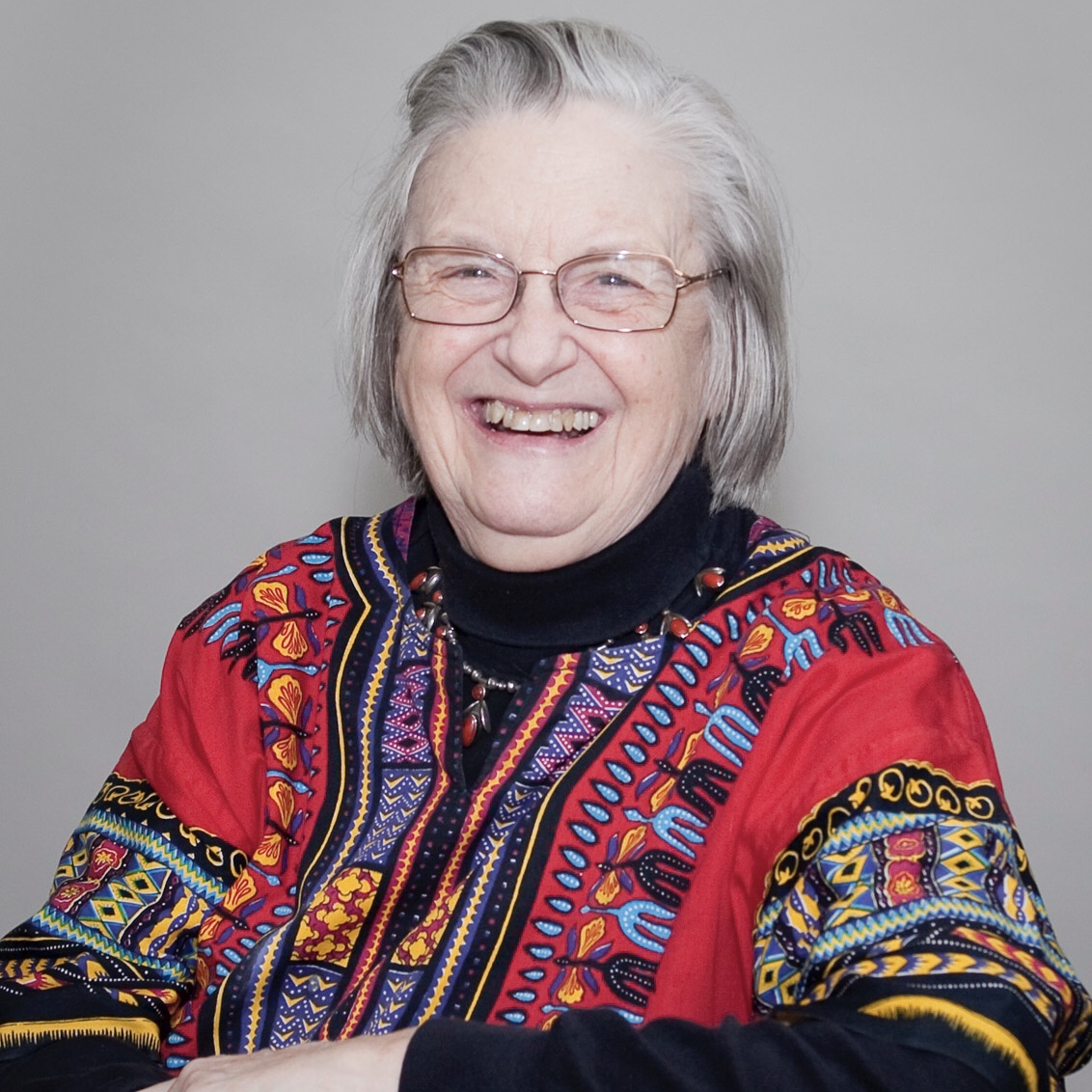
Tell me briefly about Elinor Ostrom.
Lin Ostrom was born in Los Angeles in 1933. Raised in poverty by her mother, (her father walked out on them when she was young), she had to fight hard simply to gain an education. Having been rejected from studying economics at UCLA, (on the grounds of being too female), she finally managed to get a place in the Political Science department, the first female student they had accepted in 40 years. Later she would be given an ultimatum by her husband to abandon her studies. She divorced him and continued.
After completing her PhD, she devoted her life to showing how shared resources, such as water, food and the environment could be managed sustainably. She became known in the global economics community for her groundbreaking research, as well as her infectious laugh and eccentric dress-sense.
In 2009, in spite of all of the hurdles she had faced, Lin Ostrom won the Nobel Memorial Prize in economics, the first woman ever to do so. “I won’t be the last!” she remarked.
What is it specifically about Elin Ostrom that you find remarkable?
First imagine a person born with the advantages of a wealthy, stable home-life, a readily accessible education, a direct route into university etc. For such a person to do something sufficiently groundbreaking in economics to win a Nobel is exceptionallydifficult. Now imagine a person who achieved that whilst coming from a very difficult home-life and background where people actively tried to prevent their education. Every step of the way that person had to compete for things that other people just had handed to them. And now imagine such a person in achieving that, in those circumstances, with a smile on their face.
Lin Ostrom’s resilience was truly remarkable. Two years after receiving the Nobel Prize, she was diagnosed with pancreatic cancer, but she didn’t slow down. She continued to research and publish – her final paper being published on the 12thJune 2012, the day she died. Beside her hospital bed was the half-annotated thesis of one of her PhD students – the first thing Lin Ostrom started that she didn’t finish.
All you have are 5 words to describe Elin. What are they?
Positive. Determined. Funny. Stubborn. Warm.
Can you tell me, in layman’s terms, about Elin Ostrom’s major achievement, in your view:
First, we have to go back to an idea in economics called “the tragedy of the commons”. Imagine a farmer owns a pasture where she keeps cows. She won’t put more cows in the pasture than the pasture can sustain because they’ll eat all of the grass and then starve. Simple enough. Now imagine a pasture that is common land and anyone can put cows on it so lots of people do. Each farmer receives individual benefit by adding more cows and the pain caused by overgrazing is shared by the group as a whole.
So, the theory said basically, that we would screw up shared resources (land for grazing, fish in the sea, timber in forests, water, etc.) – whatever it is, we can’t trust individuals to act in the interests of the wider group.
A good current day example is climate change. Everyone knows that human behavior is causing the climate to warm. And the more that happens, the more screwed we are. To fix the problem we must limit the total greenhouse gas emissions of the global population. Everyone knows and accepts this but our behavior as individuals doesn’t reflect this.
Anyway…. Because Elin Ostrom was a positive person, she believed that the tragedy of the commons wasn’t inevitable. She had faith that there were solutions out there and went and found examples of groups that were indeed sustainably managing shared resources through self-regulation and importantly, explained the rules and conditions for doing this successfully.
So how could we all be a little more Lin to help make the world a better place?
We need to have faith that the good people doing good things can outweigh the bad people who do bad things and tragedies such as irreversible climate change are not inevitable.
This post was originally published as ‘”Backwards in High Heels”

 My Name is Not Debbie