
I’ve been talking to people about women who inspire them. The conversations transcribed are more or less verbatim. Do drop me a line if you would like to sing the praises of a woman deserving of recognition.
Inspiration to Ivana Bašić
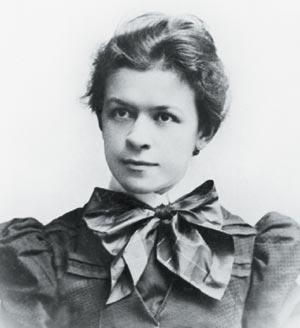
Tell me a little bit about the woman you find inspiring, and what it is about her that resonates with you.
Her name is Mileva Marić, she was a Serbian mathematician, and the first wife of Albert Einstein. Her story resonated with me, partly because we come from the same country; I was born in Serbia and she’s from Serbia, and also, I think, because I was very good at maths. At school, maths was kind of a “boys’ subject”, and I felt that people were surprised that I liked it. In high school we had a competition, which involved all the other classes in the school, to see who could solve this very difficult maths problem… I solved it… and I remember everybody being very surprised that a girl ended up solving this very difficult problem… but even after that I didn’t feel that I was encouraged to continue with the subject, and if that’s how I felt, I can only imagine how she felt, because she was born in the late 19th century in Serbia. You couldn’t even study physics if you were a girl, it was a subject that was reserved for the boys, not for the girls, but her father was quite a wealthy man, and he persuaded the Minister for Education to allow her to study it. She ended up continuing with it because she was very dedicated to her subject. I think it’s quite sad that she wasn’t celebrated for all the work she did. It hasn’t been proven that she helped Einstein with the work he did but there are numerous letters where Mileva speaks about the work as “our work”, rather than “his work”, even Einstein himself, in many letters, both to her, and friends and family, uses the phrase “our work”, to me that means they worked on his papers and his theories together.
It sounds like she was from a very supportive family environment.
Yes – for her father to push her to study physics, rather than what you would expect – you know, for her to have children and become a mother, it was quite unusual, particularly for countries in the balkans. So yes. It is very unusual, but it’s great!
… so when did you first learn about Mileva?
I actually didn’t learn about her at school, I only found out about her not that long ago, which is really, when you think about it, quite bizarre, I don’t remember at school being taught about brilliant Serbian women, which is quite strange… anyway… I don’t know where I first found out about her to be honest. I just know it wasn’t when I was at school. I watched the series “Genius” about Einstein, although that was more about his side of the story, rather than hers. That was what prompted me to find out more about her.
Marić and Einstein met when she went to Zurich to study physics, and they were in the same class at the Polytechnic Institute in Zurich. She was in a class with Albert and another three men. So she was the only woman in the class. Albert’s family didn’t like her. Particularly his mother. For starters she was three years older than him, so his mother always referred to her as “the old hag”, who she didn’t think would give him children. She wasn’t German – they used to refer to her as an Eastern European witch, or something like that. Albert’s mother wanted him to marry a jewish, German woman who would be a house wife, and give him children, and she thought that Mileva was, basically, too intelligent to give him the type of support she felt he needed. They wouldn’t give him permission to marry her for many years, but eventually they did get married; in 1903.
They had a daughter the year before they married, unfortunately, nobody really knows what happened to her, whether she was given up for adoption, or whether she died, because there is no birth or death certificate. They then went on to have two boys. One of them, unfortunately was quite ill, he developed schizophrenia, and later on in life she dedicated most of her time to looking after him.
So, like I said, they started together in the same class, and there are numerous letters confirming that they worked together.
Albert writes to Mileva on the 27th of March, 1901: “How happy and proud I will be, when the two of us together will have brought our work on Relative Motion to a victorious conclusion.”
Mileva to her parents in 1905: “Before out departure, we finished an important scientific work which will make my husband known around the world.”
Albert writes a letter to his friend: “I need my wife, she solves for me, all my mathematical problems.”
There’s a letter in 1909, by which time Albert has become famous, and is getting a lot of attention, where Mileva writes to a friend:
“He is now regarded as the best of the German speaking physicists and they give him a lot of honours. I am very happy for his success, because he fully deserves it, I only hope and wish that fame does not have a harmful effect on his humanity.”
Shortly after this, in 1910, they have a second son, and in 1912 Albert starts a relationship with his cousin, Elsa, which is when the marriage starts to crumble. Eventually, I think, in 1914 they separated. Mileva wouldn’t give him a divorce at the beginning, I think probably because she was quite afraid of what would become of her… she was in her forties, she had two sons, to the outside world she was a housewife looking after children, but then he gave her conditions of the marriage:
“A. You will see to it (1) that my clothes and linen are kept in order, (2) that I am served three regular meals a day in my room;
B. You will renounce all personal relations with me, except when these are required to keep up social appearances;
You will expect no affection from me . . . You must leave my bedroom or study at once without protesting when I ask you to.”
All these things that a woman “should do” for her husband… obviously this only lasted for a few months, and then she did give him a divorce, but on the condition that if he ever won a Nobel prize, she would get the money. And she did. He gave her that money when he won the Nobel Prize. She used it to buy two properties in Zurich and she lived off the rental income, and then later on, by giving private lessons. I think she wanted the money, not for her personal gain, but so that she could support her sons, particularly because one of them was so ill. She needed that money.
Do you think that was “guilt money”, because she didn’t get any professional recognition?
Yes, I think that even though they both worked on the papers, he ended up signing them. They weren’t co-signed. Her name wasn’t on the papers. Now there’s the question of why she didn’t sign those papers. There are many theories of why it didn’t happen, did she want to help her husband make a name for himself?
I guess maybe at the beginning, she knew the work was important, so because they were a partnership, it was beneficial for it to be in his name, it would be given more weight, because it was a man’s voice, and a woman would be laughed off the stage, but then when he left she would have been left with nothing. No reputation in the scientific community, because all the work was in his name..? There’s also something a bit soul destroying about not being recognised financially for the work you do, so if she was putting in all those hours of work; the discussing of ideas and developing theories and at the end of the day it’s his name that is going on everything, and he is getting all the credit, both financially and intellectually, must have been hard. Good for her, standing her ground and saying that she wanted the financial compensation he received for that, because a lot of people at that time particularly, wouldn’t have had that resilience.
I would actually love to continue writing about her (Ivana wrote a brief piece about Mileva, “The Forgotten Einstein”, for a Glass Splinters at the Pleasance earlier this year), I would love to write about her after the divorce. I would like to look into whether she had any regrets; did she regret allowing him to take all the credit, how she coped with looking after her two sons… just how she ended up. I think a lot of people know about her through her living with Einstein, those years, but nobody really knows much about her after that, when she was on her own. I need to find out more about what it would have meant for a woman in her forties, in 1919 Zurich, to get divorced and have no job…
There’s no definite proof of what actually happened, but they started together in the same class, there are numerous letters confirming that they worked together, and I do believe that she helped develop those theories, particularly on special relativity, and it’s quite sad that she wasn’t acknowledged. I really don’t think we would have had Einstein if it hadn’t been for her. She was the first person to see his talents, and she pushed him. She encouraged his work, and she helped with it.
All you have are 5 words to describe Mileva. What are they?
Intelligent. Passionate. Organised. Disciplined. Methodical. Apparently Albert wasn’t organised, he was very rebellious and bohemian, so she was the one who would push him to sit down and do the work.
So how could we all be a little more Mileva to help make the world a better place?
I think you should follow your passions. I hope her story will encourage young girls to do that.
It seems clear that, although we may never know for certain just how much Mileva Marić contributed to the work of Albert Einstein, she is due more credit than she received at the time. And that she ought to be remembered as more than “Albert Einstein’s wife”.
If you want to learn more about Mileva and draw your own conclusions, there are a few books to look up, some of those are:
“Albert Einstein/Mileva Marić: The Love Letters”
“Einstein’s Wife: The Real Story of Mileva Einstein-Marić” by Allen Esterson and David C. Cassidy
“Mileva Maric Einstein: Life with Albert Einstein” by Radmila Milentijevic
“In Albert’s Shadow: The Life and Letters of Mileva Maric, Einstein’s First Wife”
This post was originally published as ‘”Backwards in High Heels”

 My Name is Not Debbie